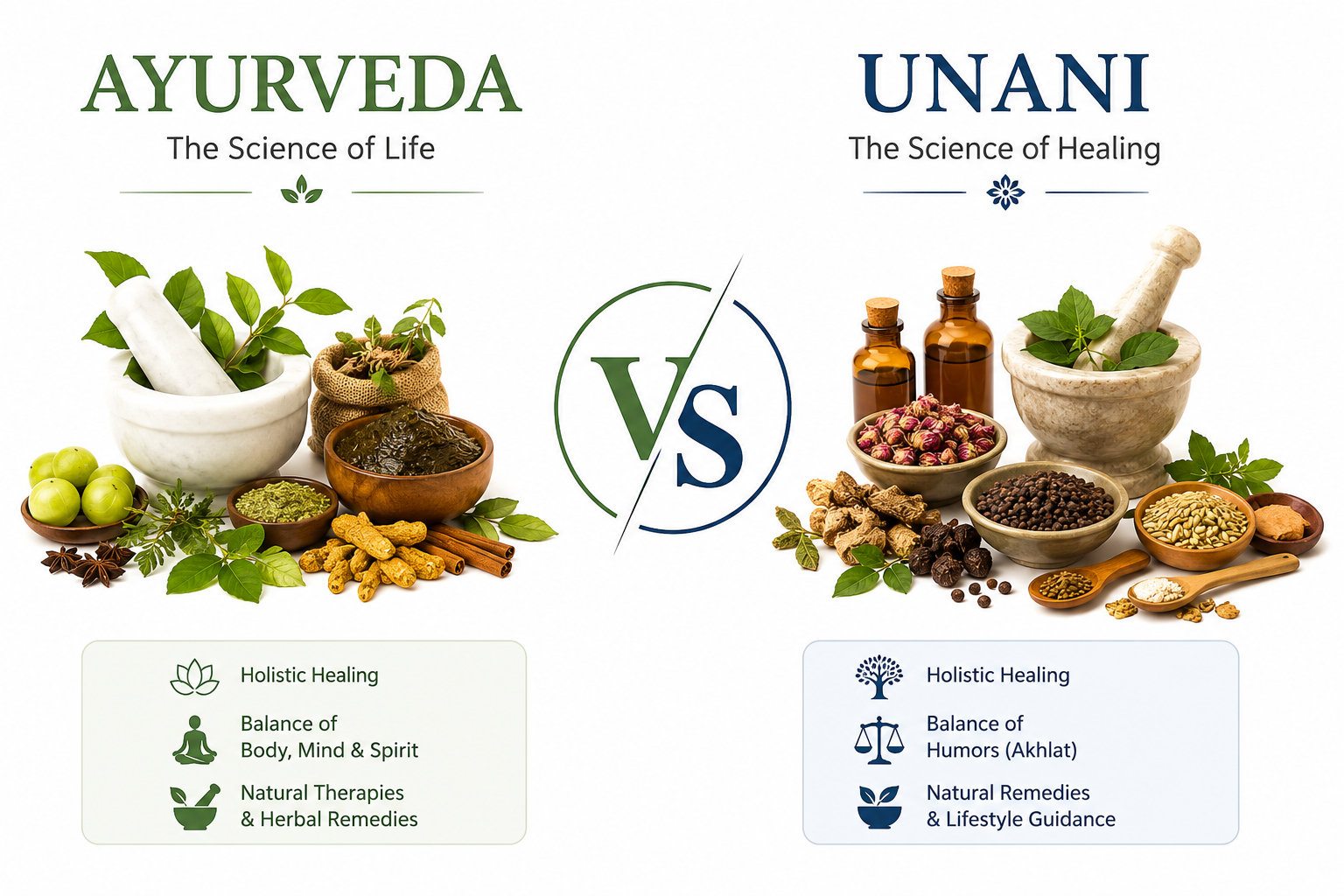
Introduction to Ayurveda and Unani Medicine Ayurveda and Unani medicine are two prominent holistic health systems that have gained recognition across the globe for their unique approaches to wellness. Both systems have rich historical backgrounds and cater to the individual’s need for balance in body, mind, and spirit. To truly appreciate the essence of Ayurveda vs Unani, it’s essential to delve into their origins and fundamental philosophies. Ayurveda, originating from ancient India over 3,000 years ago, is derived from the Sanskrit words ‘Ayur’ meaning life and ‘Veda’ meaning knowledge. This system emphasizes the integration of body, mind, and spirit and promotes harmony through a personalized approach. The core philosophy revolves around the concept of the five elements—earth, water, fire, air, and ether—combined with the three doshas (Vata, Pitta, and Kapha) that define an individual’s physical and mental constitution. As a result, Ayurveda provides tailored treatments, including herbal remedies, dietary adjustments, and lifestyle modifications, focusing on prevention rather than cure. Conversely, Unani medicine, which traces its roots back to ancient Greece and was later developed in the Arab world, is based on the teachings of Hippocrates and Galen. The term ‘Unani’ comes from the Arabic word ‘Yunani,’ meaning Greek. This system is founded on the theory of the four humors—blood, phlegm, yellow bile, and black bile. Balancing these humors is crucial for maintaining health. The Unani approach incorporates various treatment modalities such as herbal medicine, dietary regulations, and physical therapies, emphasizing the importance of a holistic lifestyle. Both Ayurveda and Unani view health as a state of equilibrium, yet they present distinct paths towards achieving wellness. This brief overview serves as a starting point for understanding how these two ancient medical systems contrast, and lays the groundwork for further exploration of Ayurveda vs Unani in the context of modern health practices. Core Principles and Practices Both Ayurveda and Unani are ancient systems of medicine that have been in practice for centuries, each with its own unique philosophies, principles, and treatment methodologies. Ayurveda, originating from India, emphasizes the concept of balance within the body through the interaction of three doshas: Vata, Pitta, and Kapha. According to Ayurveda, health is achieved when these doshas are in harmony, and illness occurs when there is an imbalance. Diagnosis in Ayurveda typically involves observing a patient’s physical condition, lifestyle, and mental state, allowing practitioners to tailor treatments that can restore balance. On the other hand, Unani medicine, which has its roots in ancient Greece but developed significantly in the Arab world, focuses on the four humors: blood, phlegm, yellow bile, and black bile. Unani practitioners believe that a person’s health is determined by the balance of these humors. Diagnostic techniques in Unani involve assessing physical signs, symptoms, and the patient’s overall bodily fluid balance. This holistic approach ensures that treatment addresses not just symptoms but the underlying causes of disease. Both systems employ various treatment modalities, including herbal medicine, dietary recommendations, and lifestyle adjustments. In Ayurveda, herbal remedies are tailored to the individual’s dosha composition, aiming for a personalized healing process. Additionally, practices such as yoga and meditation are integral to Ayurvedic treatment, promoting physical and mental well-being. Conversely, Unani emphasizes the use of specific herbs and dietary changes to balance the humors, alongside practices like Hijama (cupping therapy) and massage, which are essential components of Unani therapeutic techniques. Comparative Benefits and Limitations of Ayurveda and Unani The choice between Ayurveda and Unani as health systems can significantly depend on individual health needs and preferences. Ayurveda, rooted in ancient Indian philosophy, emphasizes balance among body, mind, and spirit. It is particularly effective in managing chronic conditions such as diabetes, arthritis, and respiratory disorders. The holistic approach of Ayurveda utilizes herbs, dietary changes, yoga, and meditation, facilitating not just recovery but also prevention. One of the key benefits is the personalized treatment plans derived from the patient’s unique prakriti (constitution). However, Ayurveda may require the patient to invest substantial time in lifestyle changes, which may be a limitation for some individuals. On the other hand, Unani, which has its roots in Greek medicine and was further developed in the Arab world, focuses heavily on the individuality of the patient while also considering external factors like environment. Unani is effective in treating conditions such as skin disorders, allergies, and respiratory illnesses. Its treatments often include herbal preparations, dietary recommendations, and therapeutic procedures. An advantage of Unani is its structured approach, which can be more accessible for patients seeking straightforward remedies. However, like Ayurveda, Unani also has limitations, particularly in its reliance on traditional knowledge and the potential variability in treatment efficacy. The lack of extensive clinical research in some areas might deter patients looking for evidence-based practices. Ultimately, the effectiveness of either Ayurvedic or Unani medicine can be influenced by the specific health condition being treated, the patient’s overall health status, and personal belief systems. Individuals may find one approach more appealing depending on their health philosophy, urgency of treatment, and willingness to embrace lifestyle alterations. Understanding both systems allows patients to make informed choices that align with their health objectives. Choosing the Right Approach for Your Health Needs When considering a healthcare system, it is essential to understand how Ayurveda and Unani can align with your personal health needs and lifestyle. Both systems offer unique philosophies and practices that can cater to different individual circumstances. Ayurveda emphasizes balance, lifestyle modifications, and the use of natural remedies derived from herbs, while Unani focuses on the body’s humors and utilizes a combination of herbal treatments and dietary regulations. This distinction can help inform your choice based on your health requirements. Individual health conditions play a significant role in this decision-making process. For instance, if you are dealing with chronic conditions that may benefit from a holistic approach focused on enhancing overall well-being, Ayurveda might be a suitable choice. Conversely, if your health challenges are primarily attributed to imbalances among the bodily humors, the Unani system could provide a more favorable framework for management. Additionally, your personal beliefs and